
Redirect Water Before It Damages Your Property
Drainage Solutions in Easton for standing water, erosion damage, and failing yard drainage
Apex Grading & Landscaping installs drainage systems that move water away from foundations, lawns, and hardscapes where it pools and causes ongoing damage. You're dealing with more than wet grass when standing water collects near your home or along property lines—soil erodes, roots rot, and concrete settles unevenly as moisture saturates the ground beneath it. This service addresses those conditions with French drains, surface drains, downspout systems, and grading adjustments that create a clear path for runoff to follow away from vulnerable areas.
The work begins with identifying where water enters your property, where it collects, and what barriers prevent it from draining naturally. In Easton, clay-heavy soil and flat yard sections often trap water during storms, and older downspouts frequently discharge too close to the foundation. A proper system intercepts surface water before it spreads, channels subsurface flow through perforated pipe bedded in gravel, and directs both away from structures and landscaping. Surface drains handle runoff from driveways and patios, while French drains manage groundwater that moves through the soil profile and saturates planting beds or crawl spaces.
If you're seeing standing water that takes days to clear or soil washing onto walkways after rain, a site evaluation can show where drainage improvements will make the most difference.
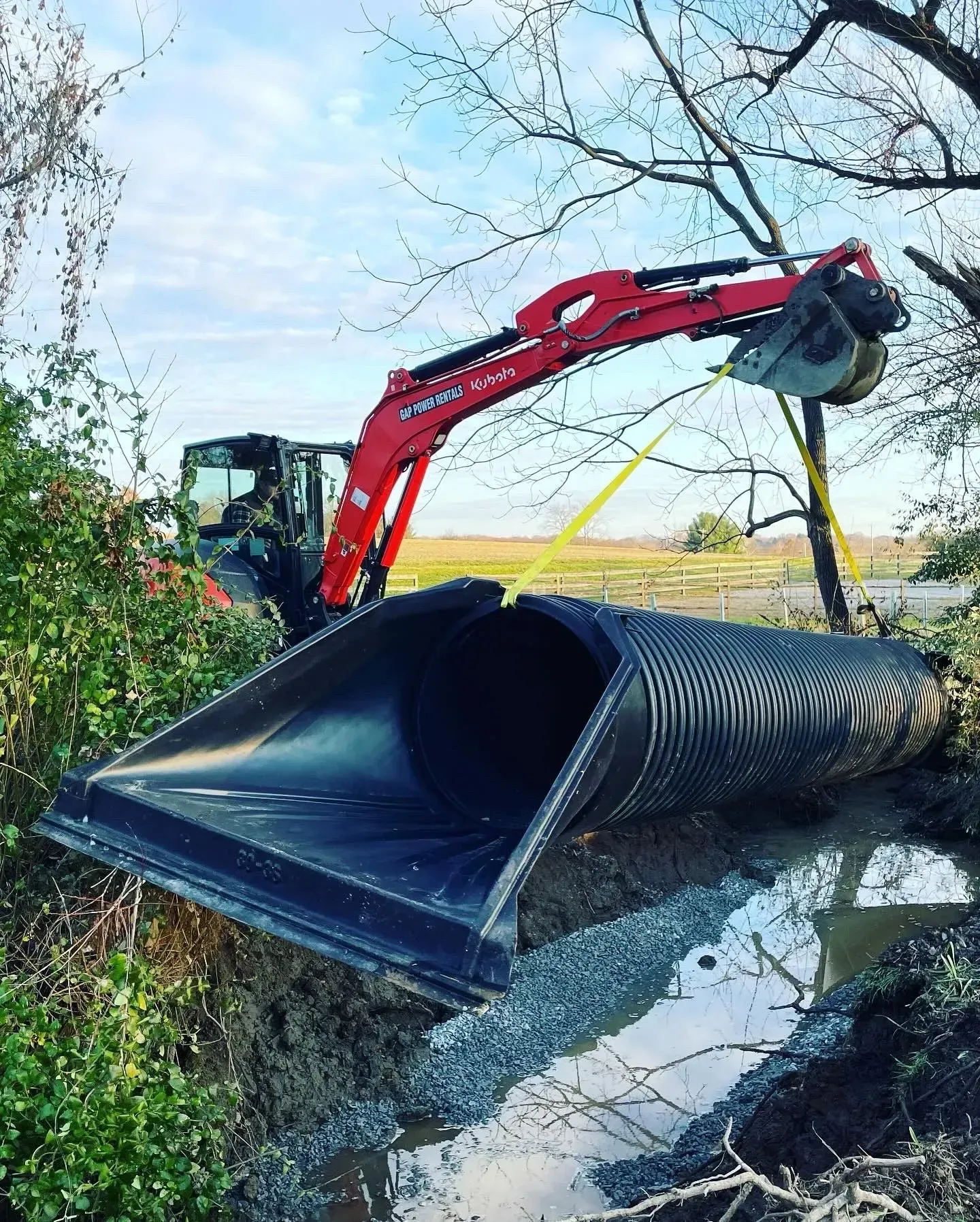
What Happens During Installation and What Changes Afterward
You'll see trenching equipment used to cut channels for drainage pipe, with depths and grades calculated to maintain consistent flow toward discharge points. Gravel surrounds the pipe to filter sediment and maintain void space, and filter fabric wraps the assembly to prevent soil intrusion over time. Apex Grading & Landscaping connects multiple drain lines when needed, routing them to daylight outlets, dry wells, or existing stormwater infrastructure depending on site conditions and local regulations.
After installation, you'll notice that water no longer sits in low spots after storms, grass stays healthier in areas that were previously waterlogged, and foundation walls remain dry where moisture used to seep through. The surface firms up in sections that felt spongy underfoot, and erosion channels stop widening along slopes. Downspout extensions keep roof runoff from saturating planting beds directly adjacent to the house, and surface grates collect sheet flow before it reaches doorways or garage entries.
The system requires minimal maintenance—checking grates for debris and ensuring outlets remain clear—but does not self-adjust if grading changes elsewhere on the property. Additional drainage lines can be added later if new construction or landscaping alters how water moves across your yard. The work does not include irrigation system installation, decorative water features, or repairs to existing sewer or septic lines.
Questions About Drainage Work in Easton
Homeowners often ask about timelines, material choices, and how systems hold up in different soil types common to the Easton area.
How deep do French drains need to be installed? Depth varies based on the water table and the source of moisture, but most residential French drains sit between eighteen and thirty inches below grade to intercept subsurface flow without disturbing surface landscaping.
What happens to the soil removed during trenching? Excavated material is typically hauled away or redistributed on-site if grading adjustments are part of the plan, and you'll discuss placement preferences during the site evaluation.
When is a surface drain more effective than a French drain? Surface drains work best for water that flows across pavement or compacted soil, while French drains handle moisture moving through the ground where it saturates plant roots and destabilizes foundations.
Why does standing water return in some areas even after grading changes? Grading alone may not address subsurface flow or situations where water enters from uphill properties, and those conditions require piped drainage systems to manage volume and direction.
How long does installation take for a typical residential drainage project in Easton? Most single-drain installations finish within one to two days, though larger projects with multiple lines, extensive grading, or challenging access may extend to three or four days depending on weather and soil conditions.
Apex Grading & Landscaping evaluates each property individually to determine which combination of surface drains, French drains, and grading adjustments will resolve your specific drainage issues. If water damage is already affecting your foundation, landscaping, or hardscapes, scheduling a site visit provides a clear plan for redirecting runoff and restoring stable ground conditions.