Prevent Foundation Damage With Proper Site Grading
Land Grading Services in Easton for sloped yards pooling water or uneven terrain around your foundation
Apex Grading & Landscaping provides land grading services to homeowners and builders in Easton, Maryland who need to correct drainage issues, prepare sites for construction, or repair yards that have settled unevenly over time. You may notice water collecting near your foundation after heavy rain, or your lawn may slope toward the house instead of away from it. These conditions create risks for basement leaks, foundation cracks, and soil erosion that worsens with each storm.
This service includes both rough grading to establish major contours and elevations across your property, and finish grading to smooth surfaces for lawns, landscaping, or construction. The work addresses slope correction so that water moves away from structures, yard leveling to eliminate low spots where standing water collects, and foundation preparation that sets the correct elevation and compaction before concrete is poured. Erosion control solutions stabilize soil on slopes and prevent washouts during rain events common to the Mid-Atlantic region.
If your property shows signs of poor drainage or you are planning new construction, reach out to discuss grading options that match your site conditions and project timeline.
How Grading Changes the Way Water Moves Across Your Property
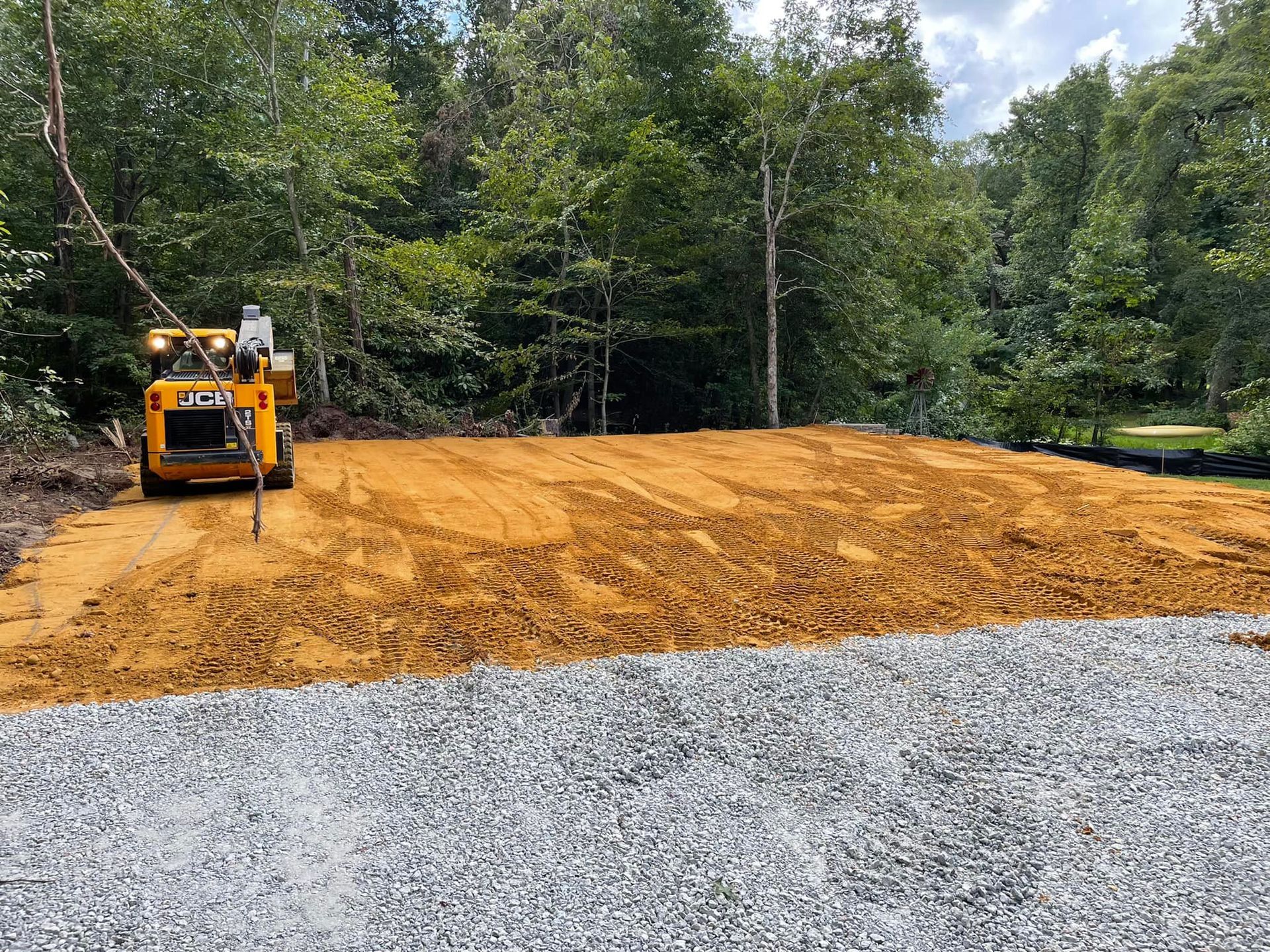
You will see grading equipment shape the land using laser-guided systems that ensure slopes meet engineering specifications, typically a minimum two percent grade away from buildings. The process starts with rough grading, which moves larger volumes of soil to create the overall shape and drainage pattern. Finish grading follows, using smaller equipment to smooth surfaces within a fraction of an inch, preparing the area for sod, seed, or hardscape installation.
After the work is complete, you will notice that rainwater no longer pools near your foundation or collects in low areas of the yard. Grass grows more evenly because the soil surface is consistent, and you will not see erosion channels cutting through slopes after storms. Apex Grading & Landscaping uses compaction methods that prevent future settling, so the corrections remain effective over years of weather exposure.
The service does not include planting, irrigation installation, or hardscape construction, though grading prepares the site for these follow-up tasks. If your property requires utility line protection or coordination with other trades, that timing is planned during the initial site assessment to avoid delays or rework.
What to Know Before Grading Work Begins
Grading projects vary based on soil type, existing conditions, and the extent of slope correction needed, so the following questions address common concerns for property owners in Easton.
What is the difference between rough and finish grading? Rough grading establishes the overall shape and elevation of the site, moving soil to create drainage paths and building pads. Finish grading smooths the surface to final specifications, preparing it for landscaping or construction with tight tolerances that ensure proper water flow and a level appearance.
How does grading prevent foundation problems? Grading directs water away from your foundation by creating a slope that carries runoff toward drainage areas or swales. Without proper grading, water collects against the foundation, increasing hydrostatic pressure that leads to cracks, leaks, and settling over time.
When is erosion control necessary? Erosion control is needed on slopes steeper than three to one or in areas with loose, sandy soil that washes away during rain. Techniques include installing silt fencing, applying erosion matting, or establishing vegetation quickly to stabilize the soil surface before the next storm event.
How long does grading take on a residential lot? A typical residential grading project in Easton takes one to three days, depending on lot size, soil conditions, and whether the work includes foundation prep or large-scale slope correction. Weather delays can extend timelines if rain saturates the soil and prevents equipment from operating safely.
Why does compaction matter after grading? Compaction removes air pockets from the soil, preventing future settling that would create low spots and drainage problems. Proper compaction is especially important for foundation preparation and areas that will support driveways, patios, or other structures that require a stable base.
Grading work requires coordination with site conditions and project goals, so accurate assessment of soil type and drainage patterns ensures the finished grade performs as intended. Contact Apex Grading & Landscaping to schedule an evaluation of your property and receive a detailed plan for correcting drainage or preparing your site for construction.