
Stop Rutting and Washouts With a Properly Built Base
Driveway Installation & Repair in Easton for driveways that rut, pool water, or need expansion to accommodate additional vehicles
Apex Grading & Landscaping installs and repairs stone and gravel driveways for homeowners and businesses in Easton, Maryland who need reliable access that handles daily traffic without breaking down. You may be building a new home and need a driveway that reaches the street, or your existing driveway may have developed ruts, low spots, or washouts that make it difficult to drive on or maintain. These problems occur when the base is too thin, the grade is incorrect, or drainage is not directed away from the surface.
This service includes new driveway installation that starts with proper base preparation and grading, driveway expansion to add parking space or widen access, and re-grading and resurfacing to correct existing driveways that have settled or eroded. Drainage correction addresses water that pools on the surface or cuts channels through the stone, using grading and culverts to move runoff away from the driving area. Stone and gravel driveways are leveled and compacted to create a stable surface that resists rutting under vehicle weight.
If your driveway needs repair or you are planning a new installation, contact Apex Grading & Landscaping to schedule an evaluation and discuss material and grading options.
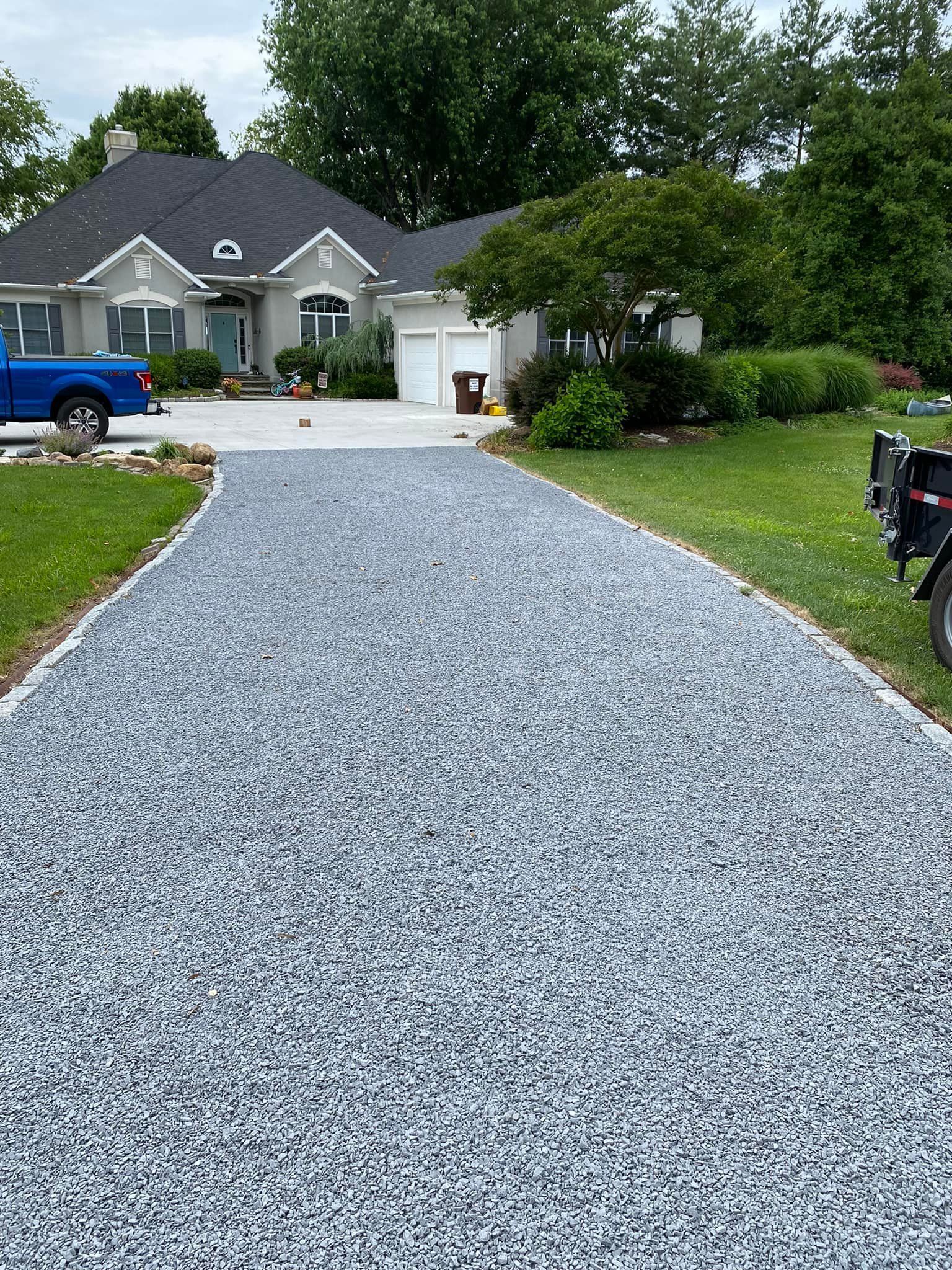
What Makes a Driveway Hold Up to Weather and Traffic
You will see a driveway built in layers, starting with a graded subbase that establishes the slope and removes soft spots. A layer of larger aggregate is compacted to form a stable foundation, followed by a top layer of smaller stone that provides a smooth driving surface. The crown of the driveway is shaped so that water runs off to the sides, preventing puddles and reducing the chance of ice forming in winter.
After installation or repair is finished, you will notice that your driveway drains quickly after rain, vehicle tires do not sink into soft spots, and the surface remains level without ruts or washboard patterns. Apex Grading & Landscaping uses compaction equipment to lock the stone in place, reducing migration and extending the time between maintenance cycles. If drainage problems exist beyond the driveway footprint, solutions such as swales or culverts are integrated to protect the surface from runoff damage.
The service does not include paving with asphalt or concrete, though grading and base preparation for those surfaces can be coordinated. If your driveway crosses wetlands or requires a culvert permit, those approvals must be obtained before work begins.
Questions About Driveway Construction and Repair
Driveway projects depend on soil type, traffic load, and drainage conditions, so the following answers address concerns that come up frequently in Easton.
What type of stone is best for driveways? Crushed stone with angular edges, such as 2A modified or 21A, compacts tightly and resists shifting under traffic. Round river stone or pea gravel does not lock together and will migrate, creating ruts and an unstable surface over time.
How thick should the base be for a residential driveway? A residential driveway in Easton typically requires a four to six inch compacted base layer, with an additional two to three inches of surface stone. Driveways that support heavier vehicles or experience frequent use may need a thicker base to prevent settling.
When does a driveway need drainage correction? Drainage correction is needed when water pools on the surface, runs lengthwise down the driveway, or cuts channels through the stone. Proper grading with a crown or cross-slope directs water to the edges, where it can flow into grass or a drainage structure without eroding the driveway.
How long does a new driveway installation take? A typical residential driveway installation in Easton takes one to three days, depending on length, width, and site conditions. Additional time is needed if grading is extensive or if drainage structures such as culverts must be installed.
Why do gravel driveways develop ruts over time? Ruts form when the base is too thin, the stone is not compacted properly, or the driveway lacks a crown to shed water. Repeated traffic in the same path compresses the stone, and water infiltration weakens the base, allowing vehicle weight to push the stone aside.
A well-built driveway provides years of reliable access with minimal maintenance, while a poorly constructed one requires frequent repairs and becomes impassable during wet weather. Reach out to Apex Grading & Landscaping to review your driveway project and receive a detailed plan for installation or repair.