Access Below-Grade Space With Controlled Earth Removal
Excavation Services in Easton for footings, utility trenches, and foundation work that must meet precise depth and alignment
Apex Grading & Landscaping handles excavation services for residential and commercial clients in Easton, Maryland who need controlled digging for foundations, utilities, pools, or site preparation. You rely on excavation when building an addition that requires a new footing, installing underground utilities that must reach specific depths, or creating space for a pool that fits engineered dimensions. The work involves removing soil to exact specifications, managing the dirt that comes out, and ensuring the excavation remains stable and safe throughout construction.
This service includes digging footings and foundations to depths determined by frost lines and structural engineering, utility trenching that routes water, sewer, electric, or gas lines without damaging existing infrastructure, and site preparation that clears and levels land before construction begins. Pool excavation removes soil to match the shape and depth of the pool shell, and backfilling returns compacted material around structures once they are in place. Dirt removal hauls away excess soil that cannot remain on site, preventing it from creating drainage problems or taking up usable space.
If you are planning construction that requires digging below grade, contact Apex Grading & Landscaping to review the scope and coordinate excavation with your project schedule.
Why Precision Matters When Digging for Structures
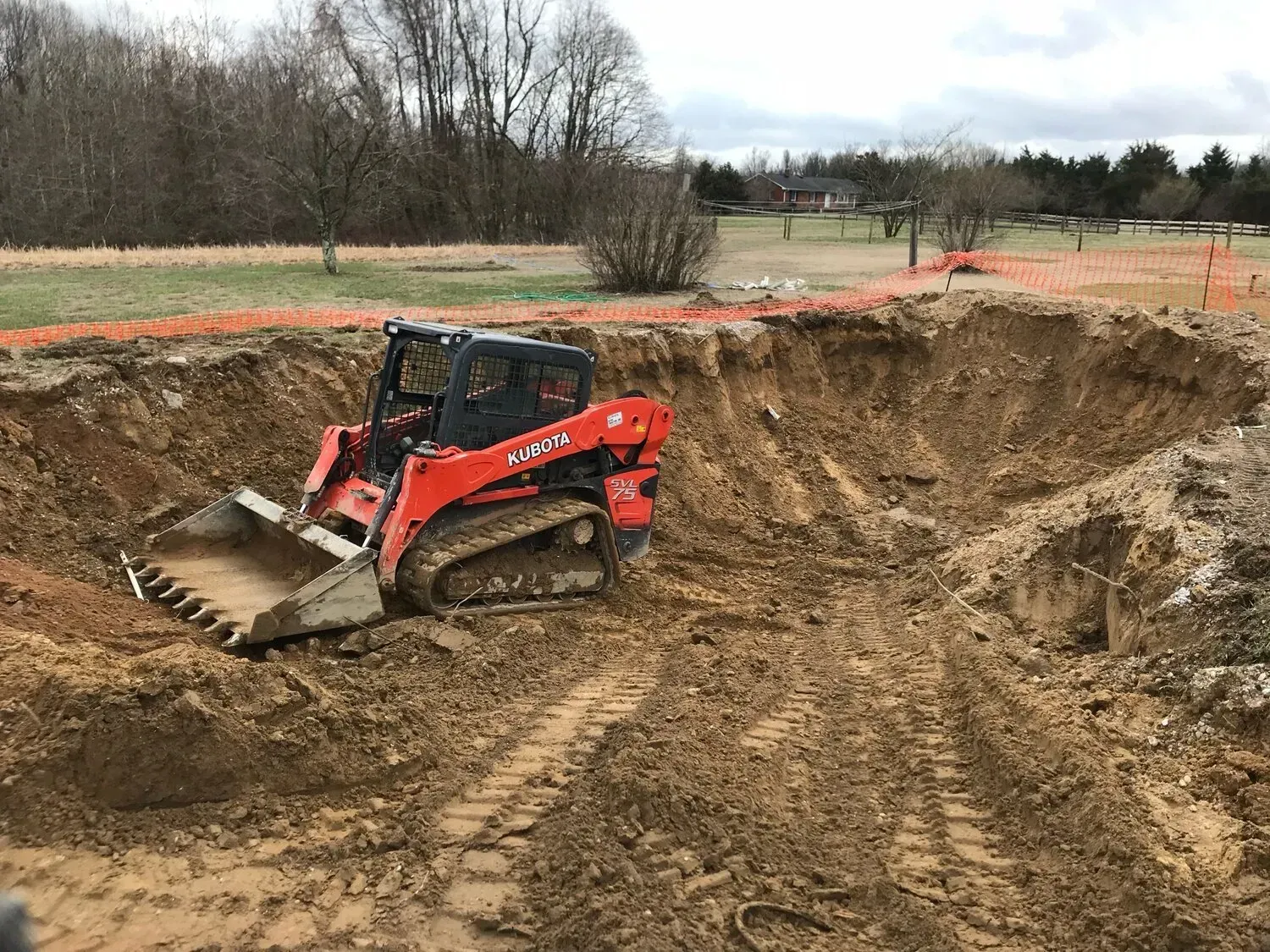
You will see excavation equipment remove soil in layers, following marked lines that define the width, depth, and slope of the dig. Footing excavation must reach below the frost line, which in Maryland typically sits around thirty inches deep, to prevent freeze-thaw movement from shifting the foundation. Utility trenches are dug to depths specified by code and the type of line being installed, with careful attention to avoid cutting through existing underground services.
Once excavation is complete, you will notice clean, vertical walls in areas where footings will be poured, and smooth trench bottoms that support pipe bedding without gaps or humps. Apex Grading & Landscaping ensures that excavated areas drain properly during construction, so rain does not fill the dig with water or soften the soil at the base. Backfilling is done in lifts and compacted to prevent future settling that could crack driveways, sidewalks, or foundation walls.
The service does not include pouring concrete, installing utilities, or building structures, though it prepares the site for these tasks. If ledge rock or unexpected underground obstructions are encountered, the work pauses while options for removal or redesign are evaluated with the property owner.
Common Questions About Excavation Work
Excavation projects require planning for soil conditions, site access, and coordination with other trades, so the following answers address concerns that come up frequently in Easton.
What happens to the dirt removed during excavation? Excess dirt is either spread on other areas of your property if grading allows, or hauled off site to a disposal location. The decision depends on soil quality, available space, and whether the material is suitable for reuse in landscaping or grading.
How do you avoid damaging underground utilities? Before digging begins, utility lines are marked by Miss Utility, a service that locates water, sewer, gas, electric, and communication lines. Excavation near marked lines is done carefully by hand or with reduced equipment force to prevent cuts or breaks.
When is shoring or sloping required for safety? Trenches deeper than five feet require either sloped walls or shoring systems to prevent cave-ins, as required by OSHA regulations. The method used depends on trench depth, soil type, and how long the excavation will remain open before backfilling.
How long does a typical residential excavation take? A foundation dig for a home addition in Easton typically takes one to two days, while utility trenching or pool excavation may take longer depending on distance, depth, and soil conditions. Weather impacts timelines, especially if rain makes the site too soft for equipment.
Why is compaction important during backfilling? Compaction removes air pockets and locks soil particles together, preventing the ground from settling after backfilling is complete. Without proper compaction, driveways, sidewalks, and foundation walls can crack or sink as the soil slowly compresses under its own weight.
Excavation work requires attention to depth, alignment, and soil stability to ensure the next phase of construction proceeds without delays or rework. Reach out to Apex Grading & Landscaping to schedule a site visit and review excavation requirements for your upcoming project.